


Dilemmo: Make Better Decisions
3.9178.00 Reviews
App Specs
- Version
- 3.4.1
- Updated On
- License
- Free
- Downloads
- 50,000+
- Developer
- Deepstash SRL
- Categories
- Education
- Platform
- Android
Screenshots

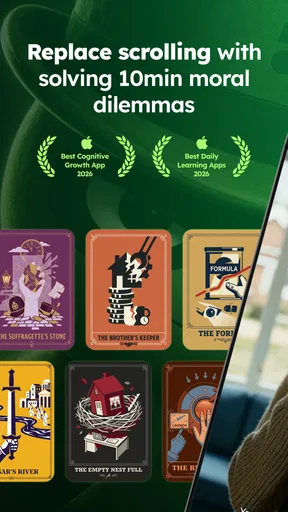

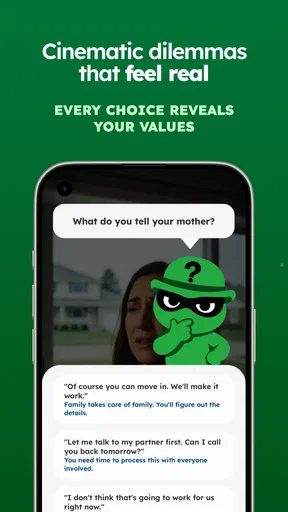
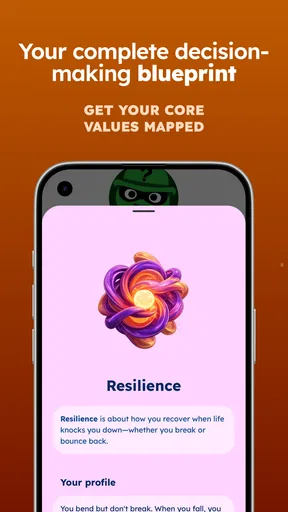
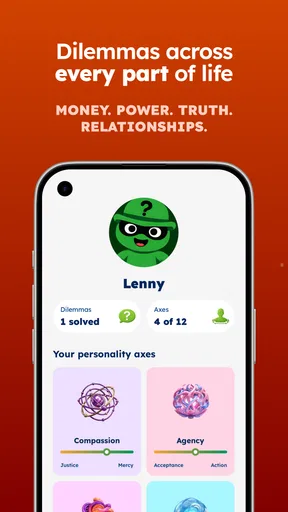
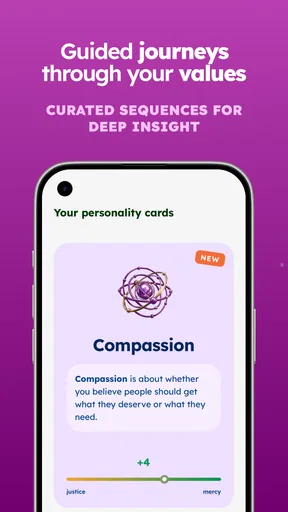
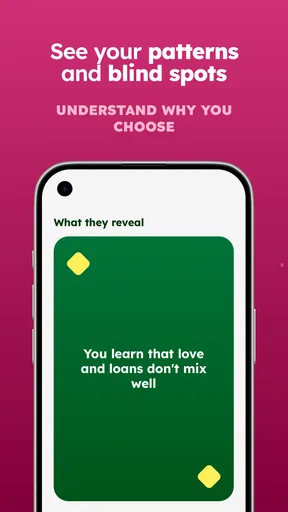
 Analysis by AppCompare
I came to Dilemmo at the point where many decision tools stop helping: not when I needed a complicated spreadsheet, but when I was stuck between two reasonable choices and kept replaying the same thoughts. This Education app from Deepstash SRL takes a different route. Its focus is short daily thought experiments, presented through the store summary “Thought experiments daily,” with the practical aim of making everyday decisions easier to examine.
That sounds modest, and in use, it is. Dilemmo is not a therapist, financial adviser, project-management suite, or replacement for careful research. I found its value in creating a pause between an impulse and a choice. Instead of telling me what to do, it gives me a compact situation to consider and encourages me to notice how I weigh competing priorities. The useful part is not a magical answer; it is the interruption of automatic thinking.
From a vague dilemma to a clearer next step
The starting condition is usually familiar: I have a decision in front of me, but the problem feels too small for a formal planning session and too important to dismiss. Should I accept an invitation when I am already tired? Should I spend time learning something new or finish a task that is already overdue? Should I choose the safer option or the one that could open a better opportunity? Dilemmo fits this middle ground better than tools designed for large projects.
When I open it, I approach the experience as a brief mental exercise rather than a lesson to complete. The app’s concept is built around daily thought experiments, so the most productive mindset is curiosity. I do not expect a definitive verdict after one prompt. Instead, I use the question as a mirror: what do I immediately prefer, what am I protecting, and which consequence am I quietly avoiding?
This makes it particularly suitable for people who enjoy reflective learning but struggle with long courses. The Education category can sometimes suggest formal study, yet Dilemmo feels closer to a pocket practice in reasoning. It asks for attention in small portions, which makes it easier to use during a quiet break, before starting work, or at the end of the day when I want to review how I handled a choice.
It is also worth setting expectations around access. Dilemmo is free to install and is marked for Everyone, while optional in-app purchases range from around fifteen dollars to one hundred dollars per item. That means I would explore the free experience first and decide whether the additional purchase options fit my routine before committing money. The app is not a good match for someone who wants every useful function without ever encountering a paid upgrade.
How I work through one thought experiment
My first step is to read the situation once without trying to produce the “smart” response. That matters because decision questions can become performance tests. If I start by guessing what the app expects, I lose the chance to see my natural reaction. I then identify the actual conflict in the prompt: comfort versus growth, speed versus quality, loyalty versus independence, or certainty versus possibility.
Worth Reading Before You Choose

EA SPORTS FC Mobile 26 Is a Bigger Football Game, but It Takes Time

Flipboard Shows What News Apps Must Do Beyond the Feed

Switching to Android Auto Means Rethinking Your Driving Routine

Google Calendar Makes a Crowded Week Easier to Manage

Ludo King Makes the Most of the Minutes Between Plans

Baby Panda World Brings Quick Play to Modern Phones, but Its Game Library Feels Busy
Next, I make my choice in plain language. I do not need an elaborate justification. A sentence such as “I would choose the safer option because I cannot absorb another setback this week” is more revealing than a polished paragraph about rationality. This is one of the app’s strongest practical uses: it can expose a personal constraint that was present all along but hidden behind abstract pros and cons.
After that, I test the decision against a small change in circumstances. What if the deadline moved closer? What if another person were affected? What if the opportunity appeared again later? This extra pass is a workflow I recommend because thought experiments become more useful when I connect them to real life. The prompt supplies the starting point, but I supply the handoff to an actual situation.
Finally, I name one action that follows from the reflection. It might be asking for more information, delaying a reply until I am calmer, setting a boundary, or accepting that the choice involves a loss either way. Dilemmo is most effective when the exercise ends in a concrete next step rather than a vague feeling that I have “thought deeply.”
The handoff from private reflection to real decisions
The important handoff is from the app’s hypothetical scenario to a decision involving real people, deadlines, and consequences. Dilemmo can help me notice a pattern, but it cannot know the details of my workplace, family, finances, or health. I therefore treat its prompts as a rehearsal space. Before acting, I check the facts that the prompt naturally leaves out.
For example, imagine I am deciding whether to take on an extra assignment at work. A thought experiment about ambition and personal limits may reveal that I regularly say yes because I fear appearing unhelpful. That insight is valuable, but it is not enough to accept or decline the assignment. I still need to check the workload, deadline, expectations, and whether priorities can be renegotiated. The app improves the question I bring to the conversation; it does not conduct the conversation for me.
This is where Dilemmo differs from a standard checklist. A checklist is excellent when I already know the criteria and need to compare options consistently. A notes app is better when I need to collect documents, numbers, or a long record of evidence. A meditation app may help me calm down before choosing. Dilemmo sits earlier in the process: it helps me examine the mental frame I am bringing to the decision.
That distinction prevents a common mistake. I would not use it as the only basis for a medical choice, a major financial commitment, a legal matter, or a high-stakes professional decision. In those cases, reflection is useful, but evidence and qualified advice must carry more weight. Dilemmo is strongest as a starting filter, not as a final authority.
A realistic everyday workflow
Here is the routine I found most practical. In the morning, I use a thought experiment as a short warm-up for the day. I read it, choose an answer, and write down the principle behind that answer in one sentence. Later, when a real dilemma appears, I compare the situation with that principle. If my behavior conflicts with it, I ask whether the circumstances changed or whether I am simply reacting under pressure.
Consider a busy weekday when a friend asks for help moving at the same time I have planned to rest. The immediate choice may feel like kindness versus selfishness. A Dilemmo-style reflection can help me separate several questions: do I genuinely have capacity, is the request urgent, am I afraid of disappointing the friend, and could I offer a smaller form of help? The result may be a clear yes, a respectful no, or a specific alternative. The app does not make that decision, but it can make the hidden trade-off visible.
I also like using the exercise after a decision, not only before one. If I agreed to something and later felt resentful, I can revisit the reasoning and ask where the handoff failed. Did I ignore a limit? Did I assume someone else’s needs? Did I choose quickly because uncertainty felt uncomfortable? This turns a single prompt into a feedback loop, which is more valuable than treating each daily exercise as an isolated piece of content.
A less obvious benefit is that the app can help separate preference from principle. I may prefer convenience, but that does not mean convenience should decide every case. Likewise, I may admire boldness in theory while choosing stability when my responsibilities are high. By comparing my answers across different situations, I can see which values are consistent and which ones change with mood or pressure. That is a more advanced use than simply answering and moving on.
Where the experience feels smooth and where it asks too much
The compact format is Dilemmo’s main strength. I can engage with a single idea without preparing a study session, and the subject matter feels more personal than a conventional fact-based lesson. For readers who enjoy questions about judgment, priorities, and behavior, that low barrier makes the app easy to return to.
There is also a useful trade-off in the lack of a heavy framework. I am not forced into a rigid decision matrix every time. That leaves room for intuition and personal context, which is appropriate for ambiguous choices. The downside is that users who want a visible method, detailed tracking, or a structured record of every decision may find the experience too light. A dedicated journal or planning app will be better for building an extensive archive.
The app’s short description is simply “Dilemmo,” so I would not install it expecting a broad course catalog or a conventional academic curriculum. Its identity is narrower and more reflective. That focus is appealing when I want a daily prompt, but it may feel limited if I am searching for tutorials, quizzes with clearly scored knowledge, or subject-specific study material.
Another friction point is the possibility of paid content becoming part of the long-term calculation. Since the app is free but includes purchases that can reach around one hundred dollars per item, I would pay close attention to what is available without spending and whether the paid material adds enough depth for my needs. Someone who only wants occasional prompts may be perfectly satisfied with limited use, while a daily user should examine the purchase screen carefully before treating the app as a permanent habit.
Who will get the most from it
I would recommend Dilemmo to people who make decisions by overthinking them, especially when the options are emotionally close and neither is obviously wrong. It can also suit readers who like philosophy in an accessible form, people building a journaling habit, and anyone who wants a small daily exercise that connects learning with ordinary choices.
It may be especially useful for students and early-career workers who are learning how to explain their reasoning. Practicing a short justification can improve conversations with teachers, colleagues, or managers because it shifts the focus from “I just feel this way” to “this is the priority and constraint behind my choice.” The app cannot replace subject knowledge, but it can strengthen the habit of making assumptions visible.
I would skip it if I wanted instant recommendations, exhaustive research, or a system that automatically ranks options. I would also skip it if hypothetical questions feel irritating rather than engaging. The whole experience depends on willingness to pause and participate. Someone who only wants a direct answer will likely find the reflective format slower than a search engine, calculator, comparison site, or conventional productivity tool.
What the current app details suggest about access
Dilemmo has an average rating of 3.6 from around one thousand four hundred ratings, alongside roughly one hundred eighty written reviews. That places it in the category of an interesting but not universally loved experience, which matches my view: the concept is appealing, yet its value depends heavily on whether the user enjoys open-ended reflection.
The app has passed fifty thousand installs, so it has found an audience without feeling like a crowded mainstream utility. It runs on Android seven or newer, and the current version is 3.4.1. The listed release date is February 13, 2026, which is useful context for readers evaluating how recently this particular app entered the market. Deepstash SRL is the developer behind it.
Those details matter less than the workflow, but they answer practical questions I would ask before trying it. It is available at no upfront cost, suitable for Everyone, and compatible with older Android devices that meet the minimum operating-system requirement. The financial question is the bigger one: free access makes testing easy, but the range of optional purchases means I would not assume the entire experience is cost-free.
My final assessment after following the full loop
Dilemmo works best when I follow the complete path: begin with a vague or emotionally tangled decision, use the thought experiment to identify the real conflict, carry that insight into a conversation or practical choice, and then review what happened. Used this way, it is more than a stream of questions. It becomes a small training ground for noticing motives, limits, and consequences before they disappear into habit.
Its limitations are equally clear. It cannot supply missing facts, settle high-stakes disputes, or guarantee that reflection leads to a good outcome. The short format may feel too thin for users who want detailed instruction, and the in-app purchase range deserves attention before regular spending. I would choose a journal, spreadsheet, research tool, or professional adviser when the decision needs evidence, records, or specialist judgment.
Still, I think Dilemmo earns a place on an Android phone for the right kind of user. I would recommend trying it when I want a daily prompt that challenges my first reaction without pretending to know my life better than I do. The best result is not an answer delivered by the app. It is a better question, a more honest explanation, and one sensible next step that I can carry into the real world.
Pros
- Simple interface makes everyday choices quick and easy.
- Helps organize thoughts when several options feel equally appealing.
- Useful for comparing personal
- work
- and lifestyle decisions.
- Can encourage more deliberate choices instead of impulsive decisions.
- Lightweight concept that is easy to understand for new users.
Cons
- Decision results may feel too basic for complex or emotional choices.
- The app cannot replace advice from qualified professionals when needed.
- Its usefulness depends on entering options honestly and clearly.
- Some users may find repeated decision prompts or steps unnecessary.
- Personal data and permissions should be checked before using the app.
FAQs for Dilemmo: Make Better Decisions
What is Dilemmo: Make Better Decisions?
Dilemmo: Make Better Decisions is a decision-making app designed to help you think through difficult choices in a more structured way. Instead of relying only on impulse, you can enter a dilemma, compare possible options, consider advantages and disadvantages, and reflect on what matters most to you. It is useful for everyday choices, personal planning, relationships, work decisions, and other situations where you need a clearer perspective.
How does Dilemmo help me choose between different options?
The app guides you through the decision process by encouraging you to define the problem and examine each possible choice. Depending on the situation, you can weigh positive and negative factors, organize your thoughts, and compare alternatives more objectively. Dilemmo does not make every decision for you; rather, it provides a framework that can reduce confusion and help you understand why one option may feel more suitable.
Is Dilemmo suitable for important or life-changing decisions?
Dilemmo can be helpful when you need to organize your thoughts about significant personal or professional choices, but it should be treated as a reflection tool rather than an expert adviser. The app cannot predict the future or understand every detail of your circumstances. For decisions involving health, legal matters, finances, safety, or serious emotional concerns, you should also consult a qualified professional or someone you trust.
Does Dilemmo: Make Better Decisions require an account or internet connection?
The exact requirements may depend on the current version of the app and the platform on which you install it. Some features may work without an account, while others can require sign-in, synchronization, or access to online services. Before creating a decision journal or entering sensitive information, review the app’s current store description, permissions, and privacy policy to understand how your data is handled.
Is Dilemmo free to download and use?
Dilemmo may be available as a free download, although certain features, advanced tools, or an ad-free experience can depend on the version offered through the Google Play Store or Apple App Store. Pricing and subscription conditions may change over time, so check the store listing before installing. If an in-app purchase or trial is offered, read the renewal terms carefully to avoid unexpected charges.


